Blog
How to Identify Pure Organic Foods and Avoid Adulterated Products
Jan
Food adulteration is one of Pakistan’s worst-kept secrets — from glucose syrup sold as honey to vanaspati passed off as desi ghee. You can’t lab-test every grocery run, but you can learn to spot the fakes. This guide gives you practical, at-home checks for the foods most commonly adulterated in Pakistani markets.
What are the most commonly adulterated foods in Pakistan?
Honey, desi ghee, cooking oil, milk, spices (especially haldi and red chili powder) and dry fruits top the list. The pattern is always the same: a cheap filler is mixed into an expensive pure food, and the blend is sold at the pure food’s price.
Common tricks include: glucose or rice syrup in honey; vanaspati or vegetable oil in desi ghee; mineral oil in cooking oil; water and starch in milk; brick powder or artificial colour in chili powder; and old, rancid nuts polished with oil to look fresh. Knowing the tricks is half the battle — the other half is the tests below.
How can you check if honey is pure at home?
Use the water test, flame test and thumb test — together they catch most adulteration. Drop honey in water (pure honey sinks as a lump; fake dissolves), try lighting a honey-coated matchstick (pure honey burns; watery fakes won’t), and check if a drop holds its shape on your thumb.
We’ve written a complete step-by-step guide: How to Check Honey Purity at Home: 5 Simple Tests. The short version: crystallization is your friend (pure honey crystallizes; syrup blends stay liquid forever), and honey that names its floral source — like our berry honey or shaftal honey — is far more trustworthy than mystery “pure honey.”
How can you identify pure desi ghee?
Pure desi ghee has a granular texture, a rich nutty aroma and a golden colour — and it melts completely without residue. Vanaspati, the most common fake, looks waxy-uniform and smells flat.
Three quick checks:
1. Melt test: Warm a spoonful. Pure ghee melts into a clear golden liquid; adulterated ghee leaves residue or separates oddly.
2. Palm test: Rub a little between your palms. Pure ghee melts quickly from body heat and smells nutty; vanaspati feels waxy and smells of nothing.
3. Winter test: In cold weather, pure ghee solidifies with a characteristic grainy texture. Uniform, plastic-like solidification suggests hydrogenated fat.
Read the label too: if it says “vegetable ghee,” “vanaspati,” or lists vegetable oil, it is not desi ghee no matter what the front claims. For the full cooking debate, see our desi ghee vs refined oil comparison.
How can you check cooking oil purity?
Pure oil should smell like its source — mustard oil should smell pungent, sesame nutty. Refined oils are odourless by design, which makes them easy to fake.
Watch for these red flags: unusually low prices (pure cold-pressed oils cost more to make), excessive foaming when heated, and labels that say “blended” in small print. The classic adulterant is cheap palm oil mixed into premium oils. Buy from brands that state the extraction method — “cold-pressed” or “kachi ghani” — and avoid loose, unlabelled oil from unknown sellers entirely.
How can you spot adulterated spices and dry fruits?
For spices: check colour and texture. Pure haldi (turmeric) is earthy yellow-orange, not neon; rub it between your fingers — artificial colour stains unnaturally. Pure red chili powder smells pungent and varies in shade; brick-powder adulteration makes it gritty. Drop a pinch in water: pure spices mostly settle, while added colours bleed immediately.
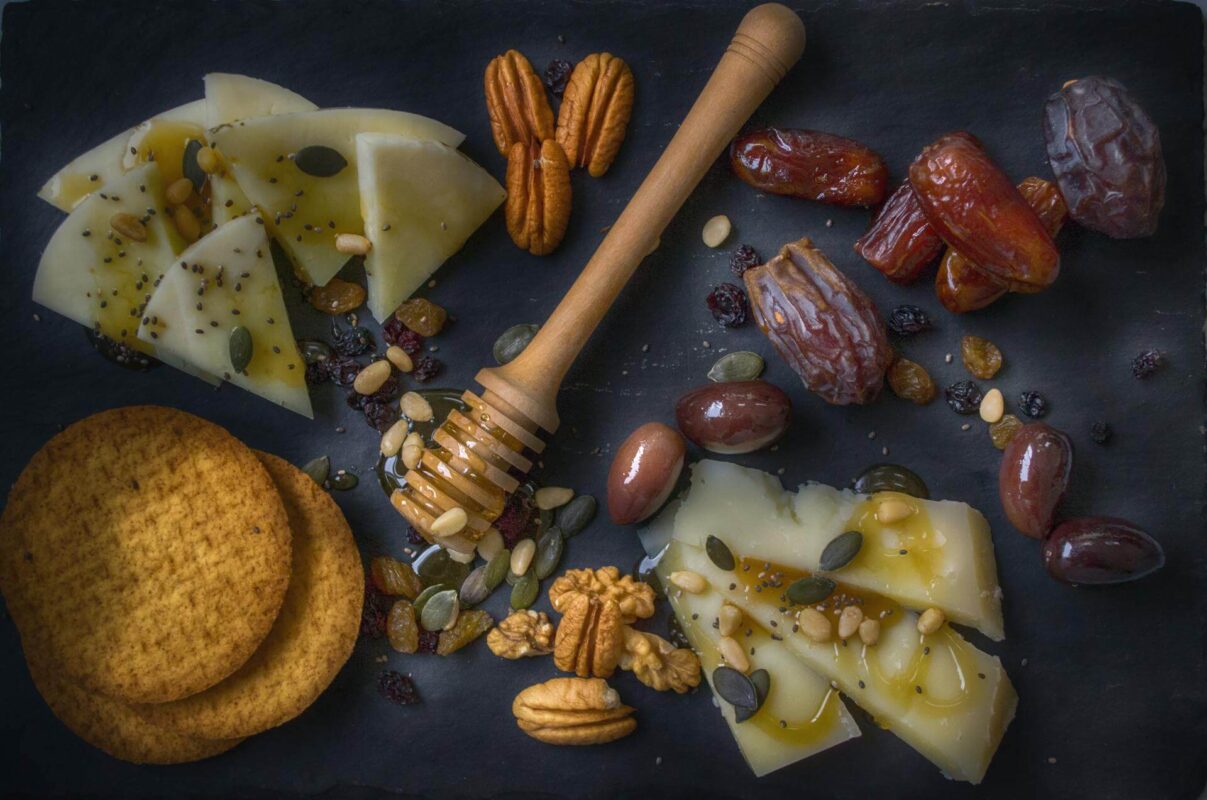
For dry fruits: trust your nose and eyes. Rancid nuts smell paint-like or sour — no amount of polishing fixes that. Avoid overly shiny nuts (oil-polished to hide age), and check for uniformity: a batch of identical-looking “premium” almonds at a suspiciously low price is usually last season’s stock. Buy from sellers with fast turnover who pack fresh, like our Fresh Nuts & Seeds Mixed.
What label red flags should you always watch for?
Vague origin, missing ingredient lists, and weasel words are the big three. Specifically:
- “Honey-flavoured” or “blended” — means it’s not the pure food
- No manufacturing/packaging date — pure foods from honest sellers are dated
- “Vegetable ghee” sold as desi ghee — different products, different health effects
- Ingredient lists longer than the food itself — pure honey has one ingredient: honey
- Prices far below market — purity costs; a “pure desi ghee” at vanaspati prices is vanaspati
What’s the single best rule for buying pure food in Pakistan?
Buy from sellers who tell you the source. Floral source for honey. Milk source and method for ghee. Farm or region for nuts. Transparency is the cheapest purity test there is — adulterators hide behind vague labels, while honest producers volunteer the details.
That’s the principle we built The Only Tasty on: every product names what it is and how it’s made. Our desi ghee is slow-cooked from pure cow’s milk with no vanaspati; our honeys name their flowers. When a seller won’t tell you these things, that’s your answer.
Frequently Asked Questions
Is expensive food always pure?
No — price alone proves nothing, and some sellers charge premium prices for adulterated goods. But suspiciously cheap “pure” food is almost certainly fake. Use price as a filter, not a guarantee, and verify with the tests above.
Are imported brands safer than local ones?
Not necessarily. Imported honey and ghee face the same adulteration economics, and you can’t easily verify a foreign supply chain. A transparent local producer you can question is often the safer bet.
Can the government test food for me?
Pakistan has food authorities (like the Punjab Food Authority) that run labs and accept consumer complaints, but testing every purchase isn’t practical. Use them for reporting suspicious sellers, and use home tests for your own kitchen.
Does organic certification guarantee purity?
Certification helps when it’s genuine, but fake organic labels exist too. Treat certification as one positive signal among several — source transparency and home tests still matter.
Where can I buy verified pure organic food in Pakistan?
Choose sellers who name their sources, show their methods, and welcome your questions. We publish purity guides (like our honey purity tests) precisely so you can verify our products yourself — try them on anything we sell.
About The Only Tasty: our team sources raw honey, desi ghee and dry fruits directly from farms across Pakistan. We write about food purity because we’ve seen what the fake stuff does to trust.

Pingback: Desi Ghee vs Refined Oil: Which Is Healthier? (2026)